Brand Lift solutions
We build Brand Lift data assets you can trust
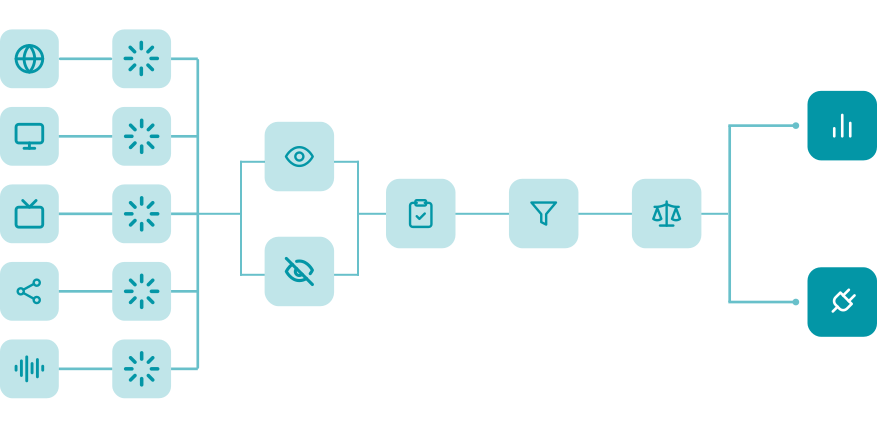
Measure every media channel passively
Best-in-class passive exposure detection technologies and fully balanced comparison groups ensure your Brand Lift results are free from methodological bias.
Digital
Brand lift for all digital display and video formats.
Pixel tagging
Audio
Brand lift for radio, streaming and podcast audio campaigns.
Pixel tagging
TV
Brand lift for connected TV, BVOD and SVOD campaigns.
Pixel and ACR tagging
OOH
Brand lift for traditional, digital and programmatic OOH campaigns.
Location tagging
Social
Brand lift for walled gardens, including Meta and TikTok campaigns.
On Screen detection
Cross-Media
Brand lift for campaigns using a combination of media channels.
Single-source passive detection
Our pixel measurement partners
Approved and verified by leading brands and advertisers.

How it works
Running a Brand Lift study
Hassle-free access to the highest-quality Brand Lift data.
Set-up
Passive advertising exposure signal is configured.
Exposure
Ad Exposure detected and matched to consumer.
Fieldwork
Control and Exposed audiences are surveyed.
Balancing
Balancing and data quality protocols ensure accuracy.
Delivery
Brand Lift results and data delivered by API or report.
What you get
Our Brand Lift deliverable
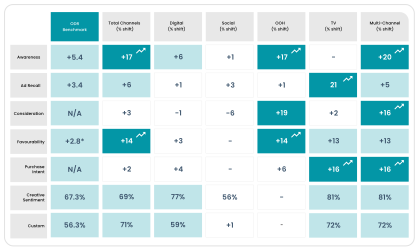
Brand Lift Scorecard
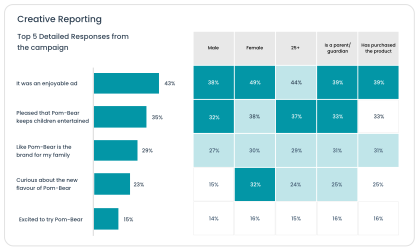
Creative Diagnostics
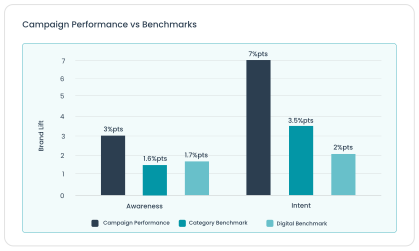
Benchmark Comparisons
Let's talk Brand Lift
Learn more about Brand Lift
Brand lift measurement is a way to assess how an advertising campaign impacts consumers’ perceptions and attitudes toward a brand. It measures changes in key metrics such as brand awareness, ad recall, favourability, consideration and purchase intent.
A Brand Lift study measures the impact of an advertising campaign on consumer perceptions and behaviours. It compares exposed and control audiences across metrics such as brand awareness, consideration, preference, and purchase intent.
Brand Lift measures the change in consumer perception and behaviour that can be directly attributed to advertising. By comparing those who were exposed to a campaign with those who weren’t, it isolates the true impact on key metrics such as awareness, consideration, and purchase intent. This helps brands understand not just if people saw an ad, but whether it actually worked.
Our Brand Lift metrics funnel includes:
- Brand Awareness
- Advertising Recall
- Brand Favourability
- Brand Consideration
- Purchase Intent
- Brand Perceptions
Performance metrics (CTR, CPA, conversions) measure short-term actions, while brand lift measures long-term brand impact; the shift in perception or intent caused by a campaign. They are complementary, not interchangeable.
While Brand Lift may not be considered a KPI itself, it allows companies to accurately measure KPIs, gauging how effectively their campaigns are influencing brand metrics. It goes beyond simple reach or impressions to measure the quality of exposure; how advertising moves audiences through the funnel from awareness to action. Used consistently, it provides a clear view of long-term brand growth.
Brand Lift helps marketers prove that their advertising is driving real impact, not just visibility. It identifies how campaigns shape perception, recall, and preference – the building blocks of brand equity. Understanding these shifts allows businesses to optimise creative, media, and messaging for stronger future performance.
Through surveys sent to our trusted panel members, we measure Brand Lift by determining two groups:
- Exposed: people who saw the ad.
- Control: people who didn’t see the ad.
The difference in responses (lift) across key metrics indicates the campaign’s impact. Some platforms also use passive data signals (search trends, social mentions) alongside surveys.
Brand Lift is calculated by comparing responses from people exposed to an advertising campaign with those from an un-exposed control group. The difference between the two groups shows the uplift attributable to the campaign.
A Brand Lift study identifies exposed and control audiences and surveys both groups against key brand metrics. Comparing their responses reveals how advertising exposure has influenced awareness, consideration, intent, and other brand outcomes.
Major ad platforms typically run brand lift studies by dividing users into exposed and control groups. The exposed group sees the ads, while the control group does not. These platforms then deliver surveys directly within their environment, such as YouTube survey cards or Facebook/Instagram poll formats, to capture differences in ad recall, awareness, favourability, or intent.
However, because these studies are conducted by the platforms themselves, there is a potential for bias. The platform has a vested interest in showing that advertising on its network drives measurable brand impact. While the methodologies are usually statistically robust, relying solely on platform-run studies can risk skewed results. Many advertisers therefore complement them with independent, third-party brand lift studies, which provide an additional layer of objectivity and credibility when assessing campaign effectiveness.
Key drivers include:
- Creative quality (memorable, relevant, emotional ads perform better)
- Audience targeting (reaching the right demographic)
- Frequency and reach (enough exposures to make an impact)
- Channel and format (video, interactive formats often drive higher lift)
- Campaign duration and spend (sufficient time and budget for statistical significance)
There’s no universal benchmark because lift depends on industry, creative quality, audience, and spend. However, even small percentage-point increases in ad recall or purchase intent can translate into meaningful business results at scale.
Brand Lift measurement should be used when you want to understand how a campaign has changed consumer perceptions or behaviours. It is particularly valuable for measuring brand-building campaigns and powering the next campaign, as clicks and conversions don’t capture the full impact of advertising.
Yes, when combined with behavioural or transactional data, Brand Lift connects shifts in perception to measurable business outcomes like sales or footfall. This creates a full-funnel view of campaign performance, linking upper-funnel brand impact directly to bottom-line ROI. It’s how advertisers demonstrate the true value of brand investment.
Yes. Brand Lift studies can measure sponsorships and event campaigns by comparing brand metrics among exposed and un-exposed audiences. This helps brands understand whether sponsorship or event exposure has improved awareness, consideration, perceptions, or purchase intent.